
Publicity Still Exists, Right?!
an interview with Abigail Monti from Unsolicited Manuscript

Not So Secret Agent is an email newsletter all about the inside scoop on cookbook publishing from senior literary agent, Sally Ekus (that’s me!). Make sure we never miss the chance to connect.
Dear Not So Secret Agent readers,
My last newsletter all about when you should start marketing your work really seemed to resonate with you. I heard from people at various stages of the publishing process who connected with the material for different reasons. Even though my advice in the post is to start yesterday, it is also never too late to begin your marketing journey.
For related reading, check out my interview with Brianne Sperber to find out What Is In-House Marketing? And while you’re at it, learn what the heck difference is between marketing and publicity. There’s also info in that post about book tours, M&P kickoff calls, and more!

Today we’re going to dive into publicity, and I am SO thrilled to bring you an interview with Abigail Monti, the talented voice behind the wildly popular newsletter Unsolicited Manuscript. In just a year, over 10k hungry readers have devoured her generous, transparent, and helpful behind-the-scenes publishing info. Also, her candid notes (that always begin with “I’m a publicist at Penguin Random House. Here’s what caught my eye in book news this week”) have generated a viral cult following. Yours truly included!
Every time Abigail publishes a piece, I rush to my keyboard to “CO-SIGN EVERYTHING” and reshare as widely as possible. So please enjoy the interview below. For a cherry on top, I am honored that Abigail will be running an interview with me in her newsletter too, so stay tuned for that next week!
***Not So Secret Agent sidenote: The Substack stars aligned, and as we were putting the finishing touches on our respective interviews, we also happened to meet up IRL for the first time.
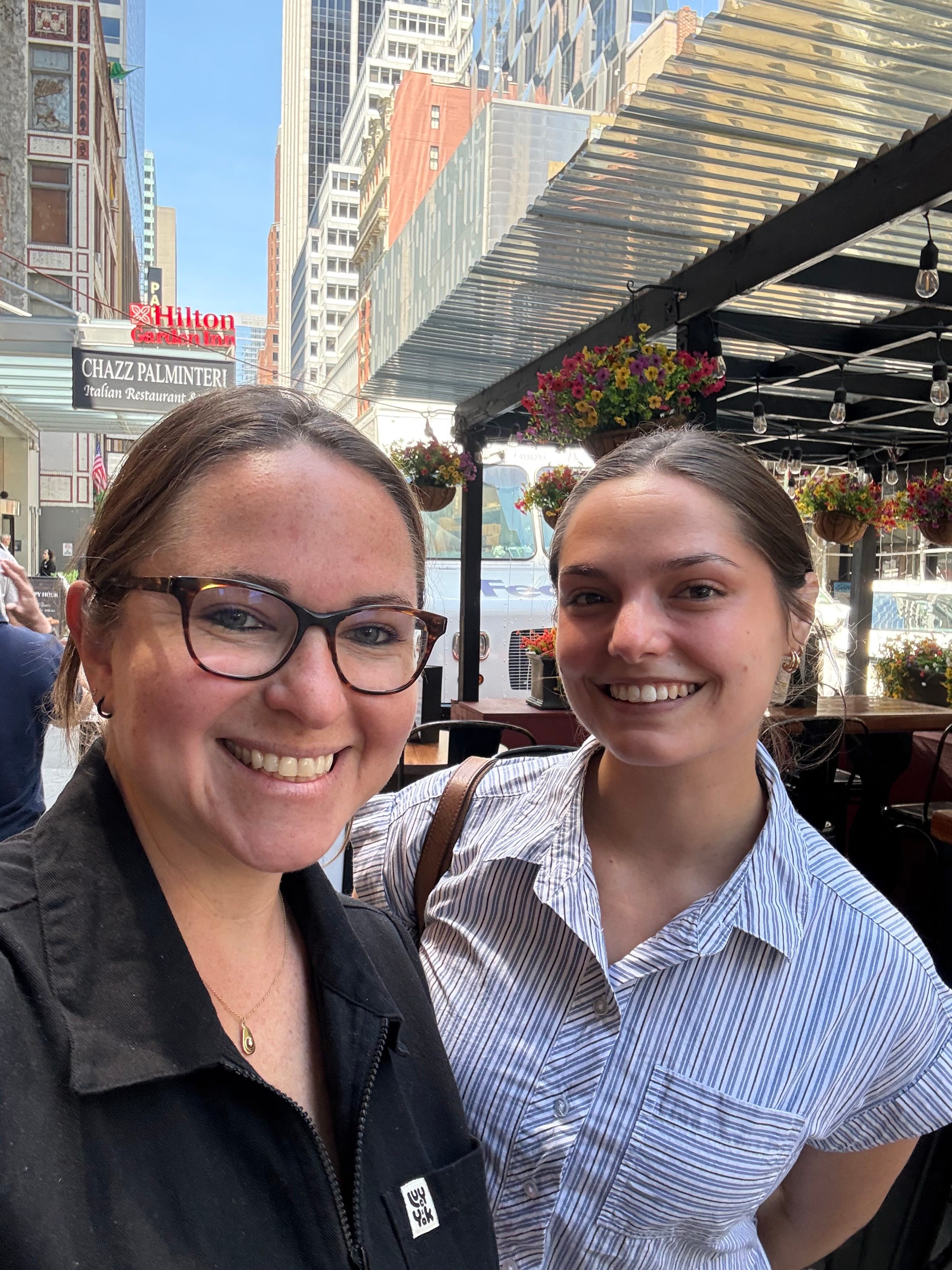
As we sipped iced coffees and gossiped shared notes about the latest in publishing, I was floored to learn that Abigail landed her current role by being scouted off LinkedIn!***
***Not So Secret Agent sidenote from Abigail (!!!): Keep those profiles up to date people!***
Without further ado…
Abigail Monti is a lifestyle nonfiction publicist at Quadrille, an imprint of Penguin Random House. She has landed media placements in outlets such as The LA Times, PEOPLE, Forbes, The New York Post, Yahoo! Lifestyle, The Guardian, Southern Living, and Better Homes & Gardens, among others. When she’s not supporting book campaigns, she enjoys baking her way through dessert cookbooks and maximizing her library card’s hold list. Her Substack, Unsolicited Manuscript, is a free weekly newsletter geared toward aspiring authors and publishing professionals.
Please introduce yourself to my readers including a little bit about what you wanted to be when you grew up.
Hello! I’m Abigail Monti, and I’m the person behind Unsolicited Manuscript. When I’m not writing newsletter posts on publishing insights and literary culture, I’m working at Quadrille, a lifestyle nonfiction imprint at Penguin Random House. I’ve had my eye set on working with books since I was 16, but as a young girl, I really wanted to be a veterinarian.
What is your official title and what does that mean?
I am an associate publicist, which essentially translates to an early- to mid-career PR professional. My job is to help authors gain as much visibility as possible through “earned” media placements. That includes interviews, podcast appearances, television segments, reviews, and influencer posts that result organically rather than through paid placements or advertising.
***Not So Secret Agent sidenote: I urge you to spend five minutes scrolling through Abigail’s notes and try not to be floored by what her “mid-career” talent looks like right now. She is one to watch!***
Briefly describe Quadrille and the types of books you publish.
Quadrille is an illustrated lifestyle nonfiction publisher, which is a convoluted way to say we publish gorgeous hardback books with plenty of illustrations and/or photos. Our main genres are cooking, craft, interiors/home/garden, and pop culture.
How do you explain the difference between marketing and publicity?
There are plenty of overlaps between the two. In my opinion, the easiest distinction is whether money is involved. Publicity typically refers to “earned” media, wherein a publicist convinces a journalist, producer, influencer, brand, etc. that it is in their best interest to share a book. No money changes hands. However, marketing typically involves some sort of monetary transaction, such as through ads or paid product placements.
***Not So Secret Agent sidenote: Imagine walking to your corner store and taking note of the cover story of the newspaper on the stand. That is publicity. Now look at the advertisement posted on the side of that stand. That is marketing. Wait, newsstands, print newspapers, and corner stores still exist, right?
Or let’s try this: This Not So Secret Agent newsletter interviewing Abigail is earned media, aka publicity. I asked her to be interviewed here. Conversely, had I ran a blurb at the top of this newsletter post stating “today’s email is brought to you by the publishing newsletter Unsolicited Manuscript” and she had paid me for the placement, that would be marketing.***
What is a quick snapshot of a day in the life?
A normal day goes as follows: First, I go through my inbox and respond to any requests. Usually this entails sending assets to journalists, scheduling interviews, making sure I’ve placed book orders from the warehouse, etc. The rest of the morning is often filled with meetings with colleagues and authors. A few recurring meetings include acquisitions panels, book concept brainstorms, campaign planning, and sales team check-ins. Midday, I take a lunch break. I am so lucky the PRH office is near Central Park, and I often take a walk or eat on a sunny bench when it’s pleasant out. In the afternoon, I try to catch up on miscellaneous tasks. This can include writing and scheduling pitches to journalists, drafting press releases, meeting with other marketing teams to solidify brand deals, putting together PR boxes for influencers, or coordinating author tours with bookstore managers and travel agencies. Then, it’s one last sweep of the inbox, and I head home!
How many campaigns do you work on at one time? Do you get to choose? What genres do you cover?
Each season, I tend to have a hand in 5–10 campaigns, each to a different degree. Some books naturally lend themselves to publicity, such as books with a clear media hook, highly excerptable content, or authors who are recognized experts in their field. Other books may be better suited to marketing efforts, particularly if they’re trend-driven or likely to benefit from paid advertising, and my role might be less involved. Other times, an author might be UK- or Australia-based, in which case I might have less to work with from a US perspective.
Some campaigns I might work on solo, and other campaigns might have 3-4 publicists assigned to help out. Everyone on the team gets to put in requests for titles that they are particularly interested in, and our lovely managers try to allocate campaigns accordingly. At Quadrille, our primary genres are cooking, craft, interior design/home/garden, and pop culture.
***Not So Secret Agent sidenote: I was shocked to hear that 3-4 publicists may be assigned to help on a campaign. This is not how many of the other houses I work with operate. Most of the books I rep have a single dedicated in-house marketing person assigned along with a single dedicated in-house publicist. Or sometimes it’s even one person with the responsibility of both landing publicity and coordinating marketing.
It’s also important to note what Abigail says about books that are more trend-driven. Since their focus is on marketing, sometimes there’s no publicist at all. In my experience this also comes into play with concept-driven books that will benefit far more from ad dollars and digital discoverability campaigns than earned publicity.***
Do you tour with authors? How do you determine which campaigns to join?
Yes! I am lucky that Quadrille encourages publicists to join authors on tour. Not only does this help us build stronger relationships with booksellers (and give us the opportunity to pick their brains on trends they’re seeing!), but it also helps us understand how different stores/venues run events and whether they sell books successfully. We consider multiple factors when deciding whether campaigns should involve a tour, such as whether the author is able to travel, whether they are front-facing or if their book is more trend-driven, and whether we believe an event can be formed around the book’s topic. You can read a more detailed breakdown here:

***Not So Secret Agent sidenote: For you longtime authors out there who once had your publicist accompany you on your book tour, I share in your collective sigh over those sweet long-ago memories. Ah, the good ‘ol days! It’s incredible that Abigail recently went out on tour for two weeks with an author. If you’re wondering how common this is, well, it is not. Your publicist will most likely accompany you to national media segments. Other than that, unless they are local to a tour stop, get ready to hail your own cabs. Wait, cabs still exist, right? Right???***
How far out do you meet with an author?
Generally, we try to book an author intro call about six to seven months before publication, but this often varies. Some authors are keen to get started as early as nine or ten months out, and other authors are so busy writing their books that they don’t want to distract themselves with PR plans until they have to! Usually, these first meetings are just to go over the campaign timeline and answer any questions authors might have.
What role do you play in the acquisitions process?
Publicists are often consulted by commissioning editors as they scout talent. For example, they might receive a book proposal and ask whether I think the proposed book’s content would suit for media placements, or whether the author’s community seems engaged enough to warrant a book tour. Most of my team is based in London, so I’m constantly asked whether I think American audiences will resonate with a certain topic, or if such and such idea is “trending” (I’ve provided “on the ground” cultural reporting on everything from banana bread lattes to cowboy boots!). When a book proposal is formally brought to our acquisitions panel, all teams (sales, editorial, and publicity and marketing) share their feedback. If everyone gives the green light, the commissioning team can move forward with making an offer.
***Not So Secret Agent sidenote: My clients often ask me if it’s okay to repeat the same info in different ways throughout their proposal. For example, explaining who the audience is and then reiterating it via the inclusion of various comps. Or highlighting major author press in your bio and then again in a comprehensive press section. I always reassure them this is fine. Why? For exactly the reason Abigail mentions above. Sales, editorials, marketing, and publicity are all reading through the proposals they’re considering acquiring. As such, they are each looking for similar information explained through the lens of their specialty. Bottom line, varied redundancy is expected.***
What stands out to you in a book proposal?
While I’m not the main set of eyes on a proposal (that would be the commissioning editors!), I love when authors demonstrate a clear understanding of the PR and marketing process from the get-go. Nonfiction proposals are unique because they’re evaluated before the book is even written, so information like an author’s audience size, industry contacts, brand affiliations, speaking experience, past event attendance, and previous media coverage can be incredibly helpful.
What stands out most is when an author demonstrates a realistic understanding of the PR process and how readers come across their next book. Word of mouth doesn’t come from thin air! A strong proposal doesn’t just explain why the book should exist, but shows how the author is positioned to help get it into readers’ hands. When I see someone who is already building community, networking in their field, creating content, speaking publicly, or getting involved with events, it tells me that they’re likely to be an active and collaborative partner throughout the publicity process.
Does your team take unsolicited (non-represented) pitches and what percentage of the list is represented versus not?
We do! I’m not certain of the ratio, but I will say that certain genres (cooking, interiors) involve agents much more often than others genres (craft, garden, pop culture).
***Not So Secret Agent sidenote: This means you can pitch Quadrille your book proposal directly, without an agent. However, you should absolutely do your research and have a full book proposal ready. Also, never directly pitch a publisher who makes it clear that they only work with agents. Why? Because if/when you sign with an agent, they will have an uphill battle going back to those houses.
What about book publicity delights you and frustrates you?
Like any job, there’s plenty of both! There’s an undeniable thrill when a media placement you’ve worked hard for finally comes through. I’m a staunch print magazine subscriber, so it’s a particular joy to see one of my cookbooks appear in the glossy pages!
The largest frustration is poor communication. Authors who don’t regularly check their email, or who promise to meet deadlines then miss them, or change their plans and forget to update me, are a constant challenge. Not only does it slow campaign momentum, but it can also affect my relationships with journalists who are often working under tight deadlines.
What can an author do to work effectively with their in-house team?
See above: frequently check your email and respond as soon as you can. I know emails can be tedious, especially for authors who might have another 9-5 outside of writing, but timeliness is essential. So much of PR runs on last-minute placements!
When did you start your newsletter and why?
I started in March 2025. My boss at the time had sent me on a Substack hunt to find bookish creators in the space so that we could reach out and offer book review copies. The thought just hit me—why don’t I have one of these? At the time, I was quite new to the industry, and learning gobs of information every day. But even as I felt like I had so much left to learn, it was clear that I already knew more than most. Writing has always been a hobby of mine, and it felt natural to put both my learnings and my writing skills to use in a way that would benefit others in the space.
You share such helpful, specific, and practical information. Where do you get your publishing insights from?
Everywhere! Anywhere! Half the time, the idea for a post comes from a passing comment someone makes in a meeting, or from an industry news headline. Other times, it’s a question I’ve wondered myself, and then sought an answer for. I’ve never tried to hide the fact that I am not an established publishing guru with 20+ years of experience and a masterclass—transparently, I’m a young adult with my whole career ahead of me—but I’ve always seen this as a strength. Because I’m still early in my career, I haven’t forgotten what publishing looked like from the outside. It’s often easier for me to spot the industry details that feel obvious to insiders but fascinating to everyone else. And when I don’t know the answer, I ask other professionals who are more experienced than me for their insights (such as yourself!), and share those on my newsletter.
What is the best way for people to connect with you and are there limitations for engaging with your work as an employee of PRH?
Is there anything else you want to plug?
I’d love to encourage readers to subscribe to Unsolicited Manuscript. It’s where I share publishing insights, career reflections, and the occasional literary rant. While I don’t offer consulting or freelance publicity services (I am happily employed at PRH!), I love connecting with fellow readers and writers.

Though Abigail and I both share an expertise in culinary titles, I appreciate that her insights speak to a wider audience. Readers who have been here for a while now know this is my jam too. Much of what she shared is relevant to more than just cookbook authors:
Collaborate with your team.
Be proactive in bringing your ideas and connections to the table.
Ideally help follow through on turning ideas into action.
Plan ahead.
Be flexible.
COMMUNICATE. 😊
Actually, looking at this list above, this is relevant for all of us. In publishing and in life.
Thanks for being here. Thanks for being you.
~Sally~
P.S. I’m so appreciative of the insight and information I get from reading Abigail’s Unsolicited Manuscript. Though there are many great resources on culinary and publishing news/how-to, here’s a quick, non-comprehensive list of some of my other current must-read favs:
Culinary Specific:
Dianne Jacob (newsletter for food writers)
Chelsea Cole Cookbook in Progress (full disclosure Chelsea is a client and she writes about both trad and self-publishing)
Jenna Helwig Cookbookery Collective (cookbook news!)*required reading IMO
Frances Abrantes Baca Headnotes (all about cookbook design!)
General Publishing Industry:
Louise Buckley Literary Agent Writing & Self-Editing Fundamentals (agent, editor, & book coach)
Doug Seibold What Publishing Is (Doug is the publisher at Agate)
Kathleen Schmidt Publishing Confidential (publicist writing about general industry insights/observations)
Andrea Bartz Get it Write (incredible industry information and you MUST check out her Ask a Bookseller series and the chat we had together!)
Courtney Maum Before & After The Book Deal
And of course, though not on Substack, Jane Freidman, publishing journalist extraordinaire.
Do people even read the CTA subscribe part of a newsletter? The first two readers who convert to paid will get a surprise from me via a DM. Wait, surprises are still a thing, right? 😉
Loved this interview! I'm a big fan of Abigail, been following and reading her insights from the very early days, I think back when she had a mere handful of subscribers. She's a lovely person and such a tremendous resource.
I shall look forward to your side, Sally, in Abigail's interview 😁
You are such a generous interviewer, Sally. Really enjoyed this, and the recommendation to Abigail’s substack which I’m looking forward to.